Step outside on a spring morning and you’ll hear far more birds than you’ll ever see. They’re hidden in leaves, perched high in the treetops or calling from a neighbor’s hedge. Learning a handful of songs and calls is one of the easiest ways to get to know the birds around your home. Once you start, a walk to the mailbox turns into a roll call of who’s visiting your yard.
You don’t need a musical ear. Most people can learn their first ten birds in a few weeks with a little practice and some memorable phrases.
Songs vs. Calls: What’s the Difference?
Birds make two main kinds of sounds, and it helps to know which one you’re hearing.
- Songs are longer and more musical. In most backyard species, males sing to claim a territory and attract a mate, so you’ll hear the most singing from late winter through early summer.
- Calls are short notes such as chips, peeps, scolds and alarms. Both males and females use them all year to keep in touch, warn of danger or signal that they’ve found food.
In fall and winter, when most songbirds have stopped singing, calls are what you’ll hear most.
10 Backyard Bird Sounds to Learn First
These birds are common across much of the eastern and central United States, and many reach farther west. The phrases in quotes are memory aids that birders have used for generations. They won’t sound exactly like the bird, but they capture its rhythm.
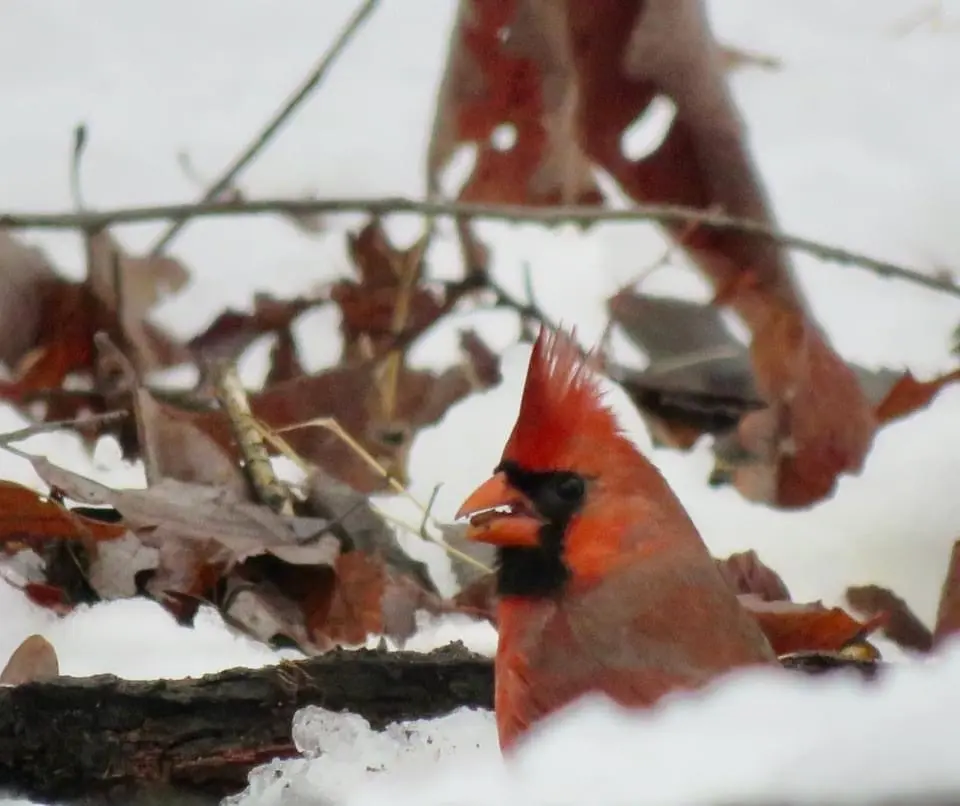
1. Northern cardinal
Loud, clear, whistled phrases repeated several times, often written as “cheer, cheer, cheer” or “birdie, birdie, birdie.” Females sing too, which is unusual among North American songbirds. Their call is a sharp, metallic chip that you’ll hear around feeders all year.
2. Black-capped chickadee
The bird says its own name: “chick-a-dee-dee-dee.” The more dee notes on the end, the more worried the chickadee is about a nearby predator. Its song is a sweet, two-note whistle, “fee-bee,” with the second note lower. In the Southeast, the Carolina chickadee sings a four-note version, “fee-bee, fee-bay.”
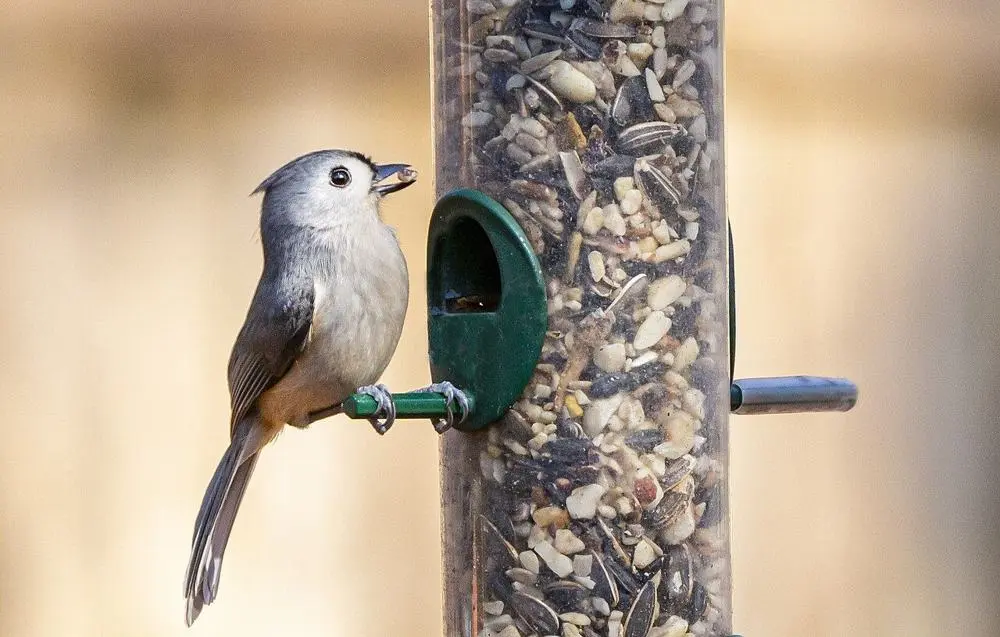
3. Tufted titmouse
A loud, whistled “peter, peter, peter” that rings through the woods, especially from late winter on. Titmice also make scolding calls that sound much like a chickadee’s, only harsher.
4. American robin
A cheerful, caroling song of short, rising and falling phrases: “cheerily, cheer up, cheerio.” Robins are often among the first birds singing before dawn. When upset, they give a rapid “tut-tut-tut” or a sharp, whinnying alarm.
5. Mourning dove
A soft, sad-sounding “coo-OOO-oo, oo, oo.” Many people mistake it for an owl. Listen also for the whistling sound its wings make when it bursts into flight.
6. Blue jay
A harsh, loud “jay! jay!” scream that’s hard to miss. Blue jays also make soft clicks and a bell-like call, and they’re excellent at imitating hawks. Learn more in our article on blue jays.
7. American goldfinch
Goldfinches call as they fly in a bouncing, roller-coaster path. Each dip comes with a cheerful “po-ta-to-chip.” Their song is a long, bright jumble of twitters and warbles.
8. Carolina wren
A surprisingly huge voice from a tiny brown bird: a ringing “teakettle, teakettle, teakettle.” Carolina wrens sing all year, even in winter, and are common in the eastern and southern states.
9. Downy woodpecker
A short, high “pik” and a quick, falling whinny of notes. In late winter and spring, listen for drumming, a fast burst of tapping on a branch. Woodpeckers drum to claim territory and attract a mate, not to find food.
10. White-throated sparrow
A slow, clear whistle often remembered as “Old Sam Peabody, Peabody, Peabody” or “Oh sweet Canada, Canada, Canada.” These sparrows nest mostly in Canada and the far north. Across much of the eastern US, they’re winter visitors that scratch under feeders and shrubs.
Tips for Learning Bird Sounds
- Start small. Learn two or three birds you already see often, like cardinals and chickadees, before adding more.
- Go out early. Birds sing most in the first hour or two after sunrise, especially in spring. This burst of song is called the dawn chorus.
- Match sound to bird. When you hear something new, try to spot the singer. Seeing a bird while it sings helps you remember the sound.
- Use the memory phrases. Say them out loud. Silly as it seems, “teakettle” and “peter” stick in your mind.
- Listen to recordings. The Cornell Lab of Ornithology’s free All About Birds website has recordings of each species. Its free Merlin Bird ID app can suggest which birds are singing around you as you record.
- Double-check app results. Sound ID apps are helpful, but they can make mistakes. Treat a suggestion as a clue, and confirm by seeing the bird or listening again.
- Keep notes. Jot down the date, time and what you heard. You’ll start to notice patterns, like when the first spring songs begin each year.
Listen for the Alarm
Once you know the everyday sounds in your yard, you’ll notice when something changes. A sudden burst of scolding from chickadees, titmice, jays and robins often means a predator is close by. It might be a hawk on a branch, an owl roosting in a tree or a cat in the bushes. Follow the noise carefully and you may spot something you’d otherwise have missed.
Want to bring more of these singers to your yard? Our Backyard Birds guide covers how to identify, feed and shelter the birds at your window.