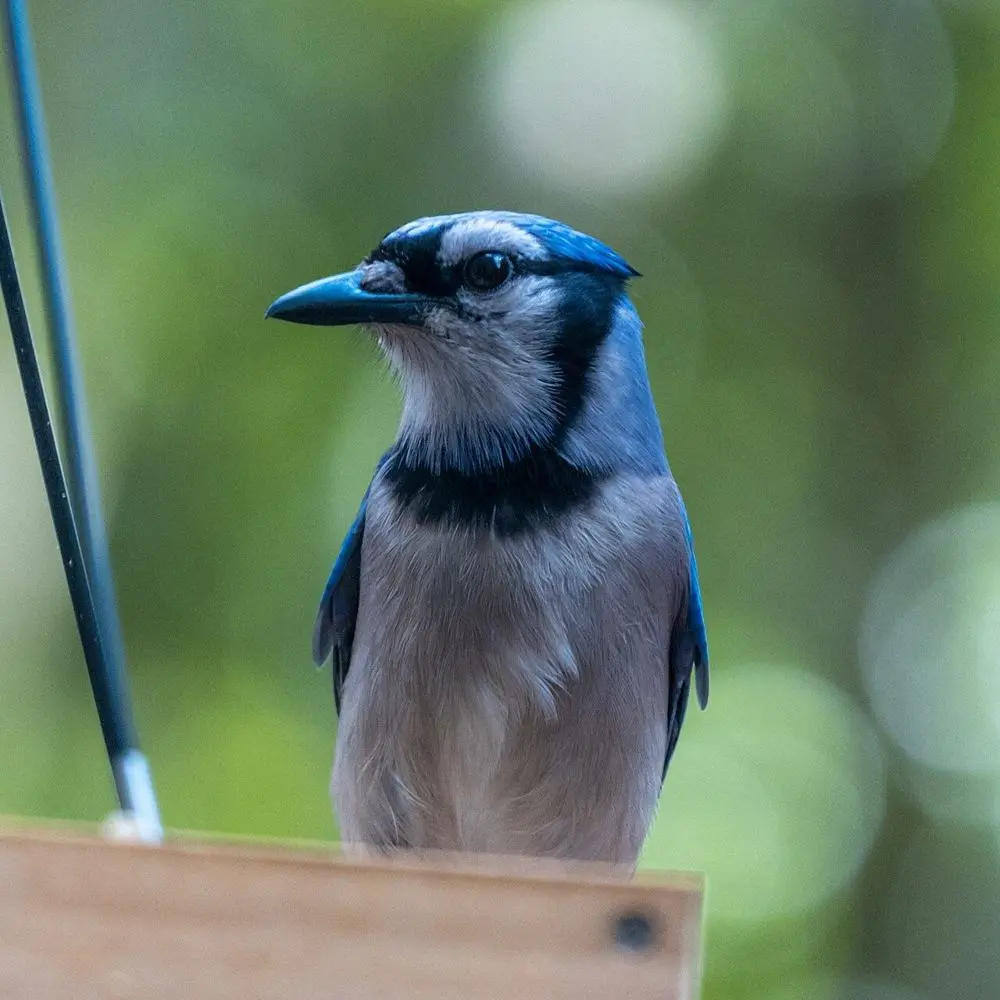
You usually hear a blue jay before you see one. A harsh jay! jay! rings out, and then a flash of blue sweeps across the yard to the feeder, scattering smaller birds as it lands. Blue jays have a reputation as loud bullies. Look a little closer and you’ll find one of the smartest, most social and most useful birds in your neighborhood.
That Blue Isn’t Really Blue
The blue jay (Cyanocitta cristata) has no blue pigment in its feathers. The color comes from the feathers’ structure. Tiny air pockets inside each feather scatter light so that only blue wavelengths bounce back to your eye. If a blue jay feather is crushed or seen with light shining through it from behind, the blue disappears and it looks dull gray-brown.
Planters of Oak Forests
Every fall, blue jays get busy gathering acorns and burying them one at a time in soil or under leaves to eat later. A single jay can stash thousands of acorns in one autumn. They carry several at a time, tucking a few into an expandable pouch in the throat and holding another in the bill.
Jays don’t recover every acorn they hide, and the forgotten ones can sprout into new oak trees. Because they often carry acorns well away from the parent tree, scientists credit blue jays with helping oak forests spread across eastern North America after the last ice age. If you have a young oak growing in an odd corner of your yard, a jay may have planted it.
More Blue Jay Facts
- They’re in the crow family. Blue jays are corvids, related to crows and ravens, and they share their family’s intelligence and problem-solving skills.
- Talented mimics. Jays can copy the screams of red-shouldered and red-tailed hawks remarkably well. They may use these calls to warn other jays, or possibly to scare other birds away from food.
- Far more than one call. Besides the familiar jay scream, they make soft clicks, whistles and a musical, bell-like call that surprises many people.
- The crest shows their mood. A raised crest usually means a jay is excited or agitated. A flattened crest means it’s calm or feeding peacefully with its group.
- Neighborhood alarm system. Blue jays loudly mob hawks, owls and cats. Many other birds and animals react to their alarm calls.
- Loyal partners. Pairs often stay together for years, and both parents help build the nest and feed the young.
Are Blue Jays Really Bullies?
Blue jays are bold at feeders, and they’re known to sometimes take eggs or nestlings of other birds. That habit gave them a bad name. But studies of what blue jays actually eat show that the great majority of their diet is acorns, nuts, seeds, fruit and insects. Eggs and baby birds make up only a tiny fraction. Their noisy alarm calls also help warn smaller songbirds when a predator is nearby.
Coming and Going
Some blue jays migrate south in fall, while others stay put all winter. Scientists still don’t fully understand why. The same bird may migrate one year and stay home the next. In autumn you might even spot loose flocks of jays flying south during the day, especially along lakeshores and coastlines.
How to Welcome Blue Jays to Your Yard
- Offer peanuts in the shell. Blue jays love them, and watching one decide which peanut to take is great entertainment.
- Use a platform or tray feeder. Jays are big birds and prefer an open place to land. Black oil sunflower seeds and suet are favorites too.
- Plant native oaks. Oaks feed jays with acorns and support hundreds of caterpillar species that jays and other birds feed their young.
- Keep fresh water available. A clean birdbath draws jays for drinking and splashy baths, even in winter if you can keep it from freezing.
- Leave the leaves. Fallen leaves give jays a place to hide acorns and hunt for insects.
Next time a blue jay announces itself in your yard, take a moment to watch what it does. You might see it bury tomorrow’s oak tree.