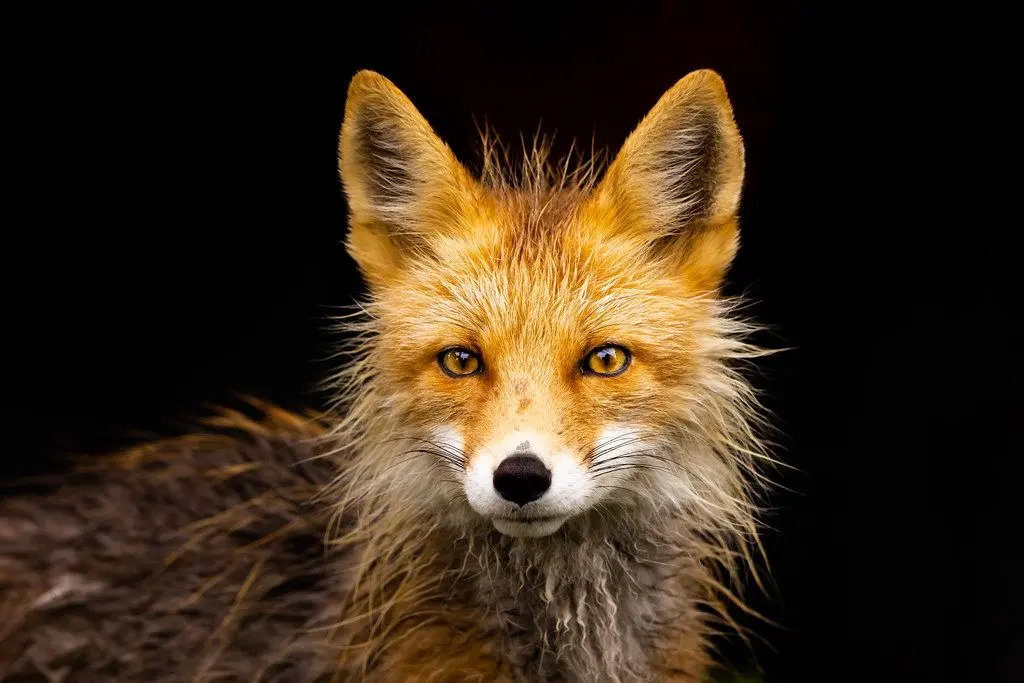
A flash of orange crossing the lawn at dusk, a pair of eyes at the edge of the headlights, a strange scream in the middle of a winter night. If you’ve noticed any of these, there’s a good chance a red fox lives closer to you than you think.
Red foxes have done remarkably well living alongside people. They hunt in farm fields, golf courses, cemeteries, rail lines and quiet suburban neighborhoods, and most of the time they go about their business without anyone noticing.
The Most Widespread Wild Carnivore on Earth
The red fox (Vulpes vulpes) lives across North America, Europe, Asia and North Africa, a wider range than any other wild member of the order Carnivora. In the United States it’s found in almost every state, from city edges to open countryside.
Despite that big, bushy look, a red fox is a small animal. Most adults weigh somewhere between 8 and 15 pounds, about the size of a house cat with longer legs. Much of what you see is fur and tail.
Things Worth Knowing About Red Foxes
- Look for the white tip. Not every red fox is red. Some are silver, black or a mix called “cross fox,” but nearly all of them have a white tip on the tail.
- Their hearing is extraordinary. A red fox can hear a mouse squeaking or rustling under snow or grass from a good distance away and pinpoint exactly where it is.
- They hunt with a high-jump pounce. Once a fox hears its prey, it leaps high into the air and dives nose-first onto the spot. Some researchers think foxes may even use Earth’s magnetic field to line up these jumps, since they seem to pounce more successfully facing roughly northeast.
- They eat a little of everything. Mice, voles and rabbits make up much of the diet, along with insects, birds, berries, fallen fruit and, when they can get it, our garbage.
- They save food for later. A fox with more than it can eat will bury the extra in a shallow hole and come back to it, a habit called caching.
- They have cat-like eyes. Red foxes have vertical, slit-shaped pupils, which help them see well in dim light at dawn and dusk.
That Scream in the Night
Red foxes are surprisingly vocal. They bark, yip, whine and chatter, but the sound that startles most people is the scream: a loud, eerie, almost human-sounding cry. You’re most likely to hear it in winter, from about December through February, when foxes are pairing up for the breeding season.
It sounds alarming, but it’s simply foxes talking to each other.
Fox Families in Spring
Kits are born in March or April in an underground den. A fox may dig its own, take over an old woodchuck burrow, or move in under a shed, deck or porch. A typical litter has four to six kits. Both parents help, and the father brings food to the den while the young are small.
By early summer you may see kits tumbling and wrestling near the den entrance, which is one of the best wildlife shows a backyard can offer. The family usually moves on within a few weeks of the kits starting to roam, and by fall the young foxes leave to find territories of their own.
Living Alongside Red Foxes
Foxes are generally shy and pose very little risk to people. They also do gardeners a favor by keeping mice, voles and rabbits in check. A few simple habits keep things peaceful:
- Don’t feed them. A fox that learns people mean food can lose its natural caution, which rarely ends well for the fox.
- Secure trash and compost. Use lids that latch and keep meat scraps out of open compost piles.
- Bring small pets in at night. Foxes rarely bother cats or small dogs, but keeping pets in after dark and protecting chickens in a sturdy coop avoids problems.
- Let a den be. If foxes raise kits under your shed, the visit is usually temporary. Wait until the family moves on, then close the opening so it isn’t reused.
- Watch for signs of illness. A fox with patchy fur may have mange, and one that seems unusually bold, confused or aggressive could be sick. Keep your distance and call your local wildlife agency or a licensed rehabilitator.
A red fox trotting across your yard isn’t a problem to solve. It’s a sign that the land around you still has enough wild space, and enough mice, to support one of the cleverest hunters in North America.