For a lot of people, the first snake they ever see up close is a garter snake. It’s slipping between the tomato plants, sunning on a warm rock or disappearing under the edge of the porch. And for a lot of people, the first reaction is a jump.
That’s a shame, because the eastern garter snake is about as harmless and helpful as wild neighbors get. It eats garden pests, stays out of the way, and has some of the most surprising habits of any animal in your yard.
Meet the Garter Snake
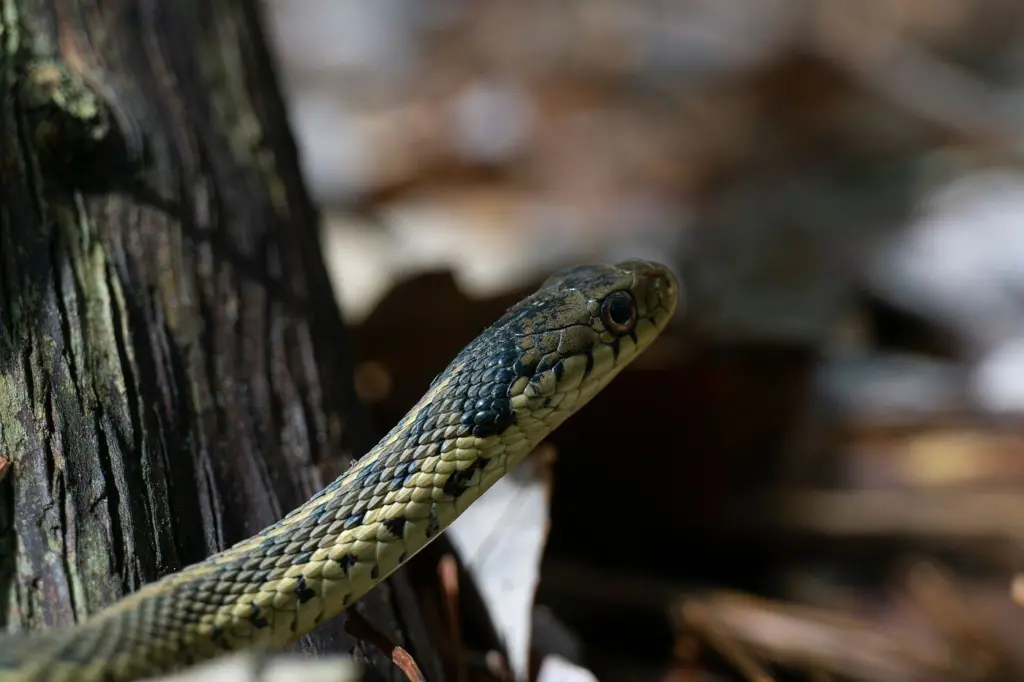
The eastern garter snake (Thamnophis sirtalis sirtalis) is one of the most common snakes in eastern North America. It’s slender and usually 18 to 26 inches long, with three light stripes running down a darker body. The stripes are often yellow, but can be greenish, bluish or tan, and some snakes have a checkerboard pattern between them.
Garter snakes are at home in meadows, woodland edges, wetlands, parks and gardens. Anywhere there’s cover, sun and something to eat, there may be one nearby.
Things Worth Knowing About Garter Snakes
- They’re harmless to people. Garter snakes have mild saliva that helps them handle small prey, but it isn’t dangerous to humans. A frightened one might nip, but the bite is little more than a scratch.
- Their main defense is a bad smell. When grabbed, a garter snake releases a strong, unpleasant musk. Most people who pick one up only do it once.
- They give birth to live young. Instead of laying eggs, females give birth in late summer, usually to around 10 to 40 babies. Each newborn is only five to nine inches long and on its own from the start.
- They eat garden pests. Earthworms, slugs, insects, frogs, toads and small fish are all on the menu. A garter snake in the vegetable bed is working for you.
- They handle cold better than most snakes. Garter snakes are often the first snakes out in spring and the last to settle down in fall, sometimes active on sunny days when it’s barely above freezing.
- They read the air with their tongue. That flicking tongue picks up scent particles and carries them to a special organ in the roof of the mouth, which is how a garter snake tracks prey and finds mates.
Winter in a Crowd
Garter snakes spend the winter underground in a place called a hibernaculum. It might be an old rock wall, a building foundation, a rodent burrow or a crack in the bedrock that stays below the frost line. Many snakes often share the same site and return to it year after year.
The most famous example is in Manitoba, Canada, where tens of thousands of red-sided garter snakes, a close relative, gather in limestone sinkholes each winter. Backyard hibernacula are much smaller, but the idea is the same: a safe, frost-free spot is valuable, and garter snakes share it.
Why Garter Snakes Are Good to Have Around
Snakes are an important part of the food web. Garter snakes keep slugs and other small animals in check, and they become food for hawks, herons, foxes and raccoons in turn. A yard with garter snakes is usually a yard with healthy soil, plenty of insects and good cover, which is good news for wildlife of all kinds.
How to Make Your Yard Garter-Snake Friendly
- Leave a few hiding spots. Rock piles, log piles, stone walls and patches of tall native plants give snakes shelter from predators and a place to cool off.
- Offer a sunny spot. A flat rock or a stretch of stone edging in the sun gives snakes a place to warm up on cool mornings.
- Go easy on chemicals. Pesticides and slug baits reduce the food garter snakes depend on and can poison them directly.
- Mow with care. Raise the mower deck, and walk through tall grass before cutting it. Snakes resting in the grass are easy to miss.
- Keep water nearby. A small pond or a damp, shady corner draws the frogs, toads and worms garter snakes like to eat.
- Let them be. If you find a garter snake, enjoy a look and let it move on. There’s no need to remove or relocate it.
The next time something striped slips across the garden path, take a breath before you jump. It’s probably an eastern garter snake, quietly doing pest control for free.