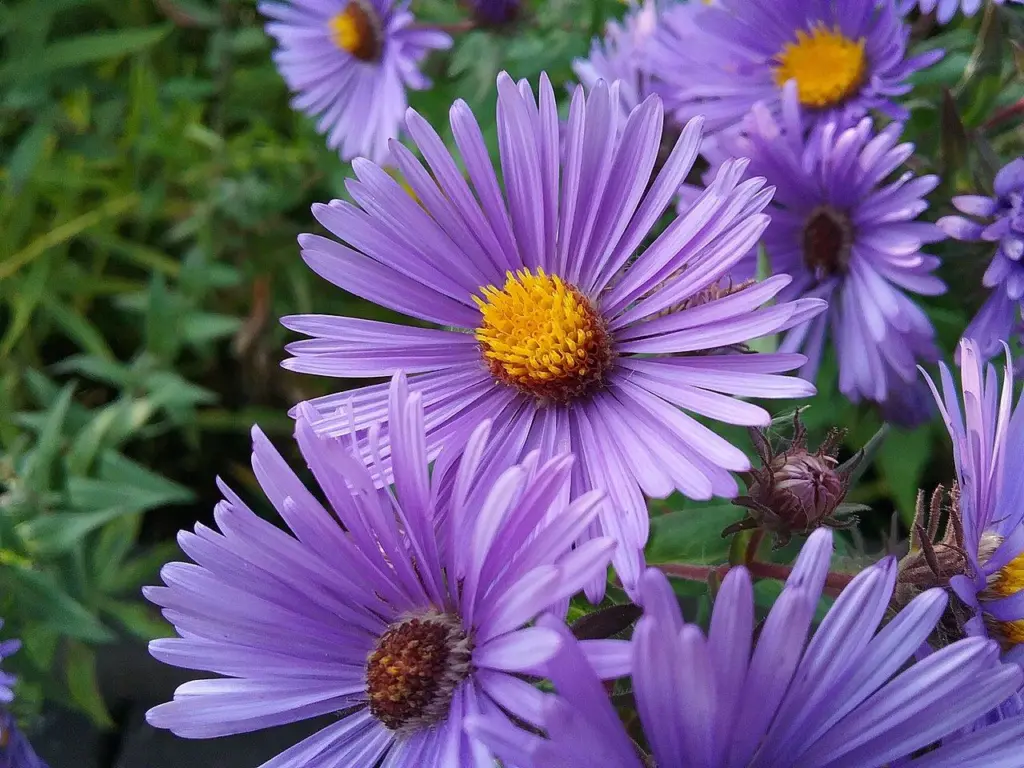
By early fall, a lot of gardens are winding down. The coneflowers have gone to seed, the summer annuals look tired, and the mornings have a chill to them. Then you notice one tall clump at the back of the bed, covered in purple daisies with bright yellow centers and buzzing with bees.
That’s New England aster, Symphyotrichum novae-angliae, and it does its best work when little else is in bloom. If you’ve got room for one big fall perennial, this is a strong candidate, and now is a fine time to start planning a spot for it.
Getting to Know New England Aster
Despite the name, this plant isn’t limited to New England. Clemson Cooperative Extension describes it as native to the eastern half of the United States and Canada, where it grows in prairies, meadows and along stream banks. It’s listed for USDA zones 4 through 8b.
It’s also a big plant. Expect stems 3 to 6 feet tall and up to 3 feet wide, though some settings produce shorter plants. The flowers measure 1 to 2 inches across, each with a golden center ringed by 30 or more narrow rays, and NC State Extension notes the count can reach about 100. Colors range from deep purple to light lavender and pink.
Bloom time generally runs from August to October, and a planting can stay in flower for six weeks or longer.
Why Late-Season Wildlife Loves It
A plant that blooms this late fills a real gap in the garden calendar, and plenty of animals take advantage of it:
- Migrating monarchs. NC State Extension specifically notes that the nectar attracts monarch butterflies on migration.
- Bees and other pollinators. Visitors include bumble bees, honey bees, miner bees and large leaf-cutting bees, along with bee flies, skippers and hover flies. Plants in this genus also support several specialist bees.
- Pearl crescent butterflies. New England aster is a host plant for pearl crescent caterpillars (Phyciodes tharos), so it feeds the next generation as well as the adults.
- Songbirds and small mammals. Both eat the seeds once the flowers are done.
Pollinators matter to the aster too. According to Illinois Wildflowers, the flowers need cross-pollination from insects, or the seeds will be infertile. For more plants that pull their weight, browse our butterflies and pollinators guides.
Where and How to Plant It
Give New England aster full sun if you can, though it will accept part shade. It prefers moist, fertile, well-drained soil and does fine in clay loam, which is good news for anyone gardening on heavy ground. Water regularly until the plants are established. After that, you should only need to water during dry spells.
If you garden outside its native range, especially in the West, look for an aster species native to your own area instead. A county extension office or native plant society can point you to good local choices. You can also find more ideas in our native plants section.
Short on space? Compact cultivars exist. Clemson lists ‘Purple Dome’ at about 2 feet tall and wide, while ‘Alma Potschke’ reaches about 3 feet with deep pink flowers.
Keeping a Tall Plant Looking Good
New England aster is easy to grow, but it has a few habits worth knowing before you plant it front and center.
- Pinch in spring. Pinching the growing tips makes a bushier plant. Clemson advises stopping in July so you don’t cut off the fall flowers.
- Offer support. Tall stems may flop, especially without neighboring plants to lean on. Stakes or sturdy companions help.
- Hide the ankles. Lower leaves often brown and drop by late summer, and hot, dry weather can make it worse. Shorter plants in front will cover the bare stems.
- Expect some mildew. Powdery mildew often shows up on the leaves in cool, moist fall weather, so don’t be surprised if you see it.
- Watch the spread. It can spread vegetatively and also self-seeds, so it may wander in a smaller bed. Removing the spent flowerheads will prevent unwanted seedlings.
What to Do With It Now
If you already have New England aster, November is a good time to decide what to do with its fading seed heads. Leaving them standing gives songbirds something to eat, as long as you don’t mind a few seedlings next year. Seed can also be saved and sown outdoors in fall, and mature clumps can be divided every three years or more.
Two practical notes for homeowners. Deer usually treat this plant as a second choice, but both NC State and Clemson rate it only moderately resistant, so it isn’t deer-proof. And if you have pets, the ASPCA cautions that eating any plant material can cause vomiting or stomach upset in dogs and cats, so it’s worth discouraging curious chewers.
Next fall, when the rest of the garden is ready for a long nap, that purple clump will still be open for business. It’s a nice thing to look forward to.
Sources: Clemson Cooperative Extension Home & Garden Information Center, NC State Extension Plant Toolbox, Illinois Wildflowers.