The first time a ruby-throated hummingbird zips past your ear, you’ll probably mistake it for a giant bee. Then it stops dead in midair a few feet from your face, looks you over, and is gone before you can say anything. It’s one of the best moments a backyard can give you, and it’s surprisingly easy to make happen more often.
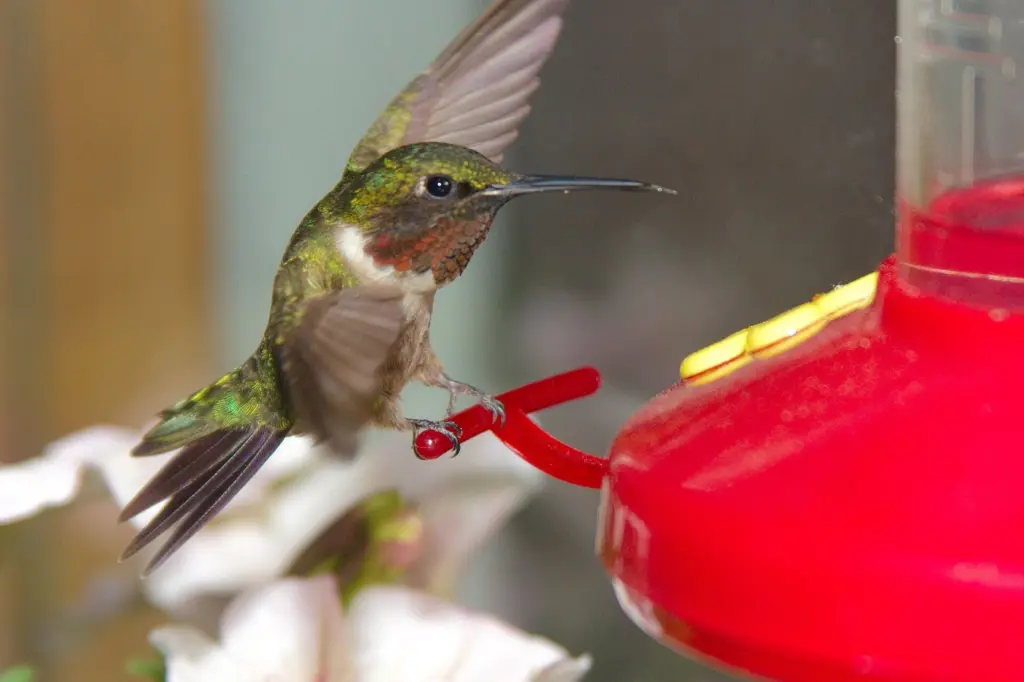
If you live east of the Great Plains, the ruby-throat (Archilochus colubris) is almost certainly the hummingbird you’re seeing. It’s the only one that nests regularly in the eastern United States.
How to Tell Males and Females Apart
Both have green backs and pale bellies. The adult male has the famous throat patch, called a gorget, but it doesn’t always look red. Those feathers only flash ruby when light hits them at the right angle. From the side or in shade, the throat can look almost black. Females and young birds have plain white or lightly streaked throats and white tips on their outer tail feathers.
Surprising Facts About a Very Small Bird
- They weigh about as much as a penny. An adult is around 3 grams, a little more just before migration when they fatten up.
- Many cross the Gulf of Mexico. In fall, a lot of ruby-throats fly roughly 500 miles across open water in a single nonstop push to reach Mexico and Central America.
- They eat lots of bugs. Nectar is fuel, but gnats, small spiders and other insects supply the protein. Nestlings are raised largely on insects.
- Dads don’t help. The female builds the nest, sits on the eggs and feeds the young entirely on her own.
- The nest is about the size of a walnut shell. It’s made of plant down bound with spider silk and covered in bits of lichen, so it looks like a knot on a branch. The silk lets it stretch as the chicks grow.
- They’re bullies at the feeder. Ruby-throats defend food sources fiercely, chasing off other hummingbirds and even the occasional bumble bee.
Feeders: Keep It Simple
The best hummingbird food is the cheapest. Mix one part white table sugar with four parts water, stir until it dissolves, and let it cool. That’s it. Skip the red dye, store-bought colored nectar, honey, brown sugar and artificial sweeteners. The red on the feeder itself is plenty to get their attention.
The part people skip is cleaning. Sugar water spoils fast, especially in summer heat. Change it every two or three days when it’s warm (daily in a heat wave), and wash the feeder with hot water each time. If you see cloudiness or black mold, scrub it out with a bottle brush. A small feeder you keep fresh does more good than a big one that sits for a week.
If one bird keeps chasing everyone else away, hang a second feeder out of sight of the first. The bully can’t guard both.
Flowers Do More Than Feeders
A feeder brings hummingbirds in for a sip. Flowers give them a reason to stay, and they come with the tiny insects the birds need. Native plants with tubular red or orange blooms are the ones they find first:
- Coral honeysuckle (Lonicera sempervirens), a well-behaved native vine that blooms for months.
- Wild columbine (Aquilegia canadensis), often in bloom right when the first birds return in spring.
- Cardinal flower (Lobelia cardinalis), a late-summer favorite for damp spots.
- Bee balm (Monarda didyma) and red buckeye (Aesculus pavia) for bigger gardens.
When to Put Feeders Out and Take Them Down
In much of the Southeast, ruby-throats start showing up in March. Farther north, late April or early May is more typical. Hang your feeder a week or two before you expect them.
In fall, you’ll often hear that leaving feeders up will keep hummingbirds from migrating. It won’t. Their departure is driven by day length, not food. Keep feeders up until you haven’t seen a hummingbird for a week or two. Late migrants passing through from farther north will be glad you did.
Keep the sugar water fresh, plant a few red flowers, and give it one season. You may find yourself with a regular who comes back to the same yard, sometimes the same feeder, year after year.