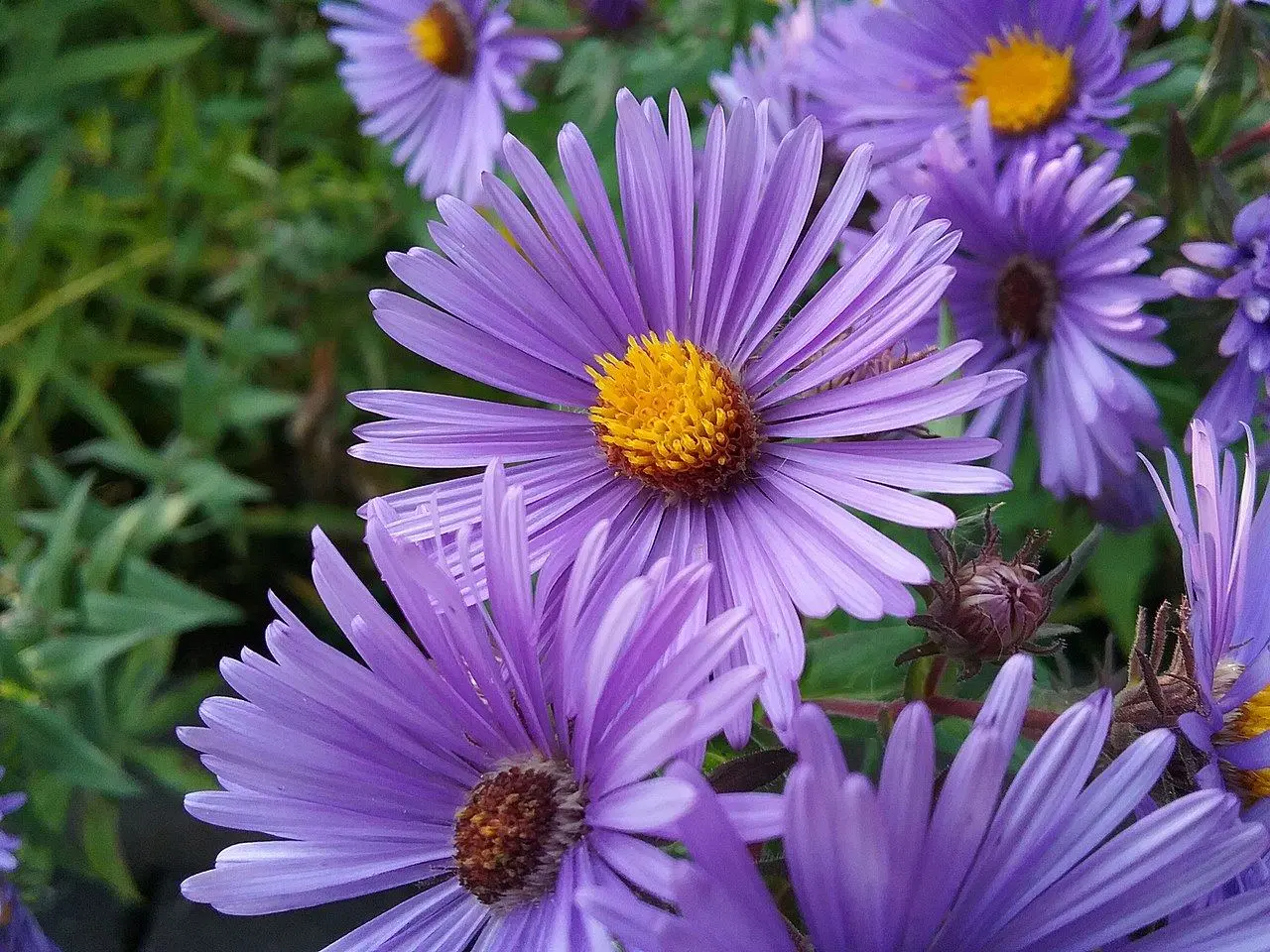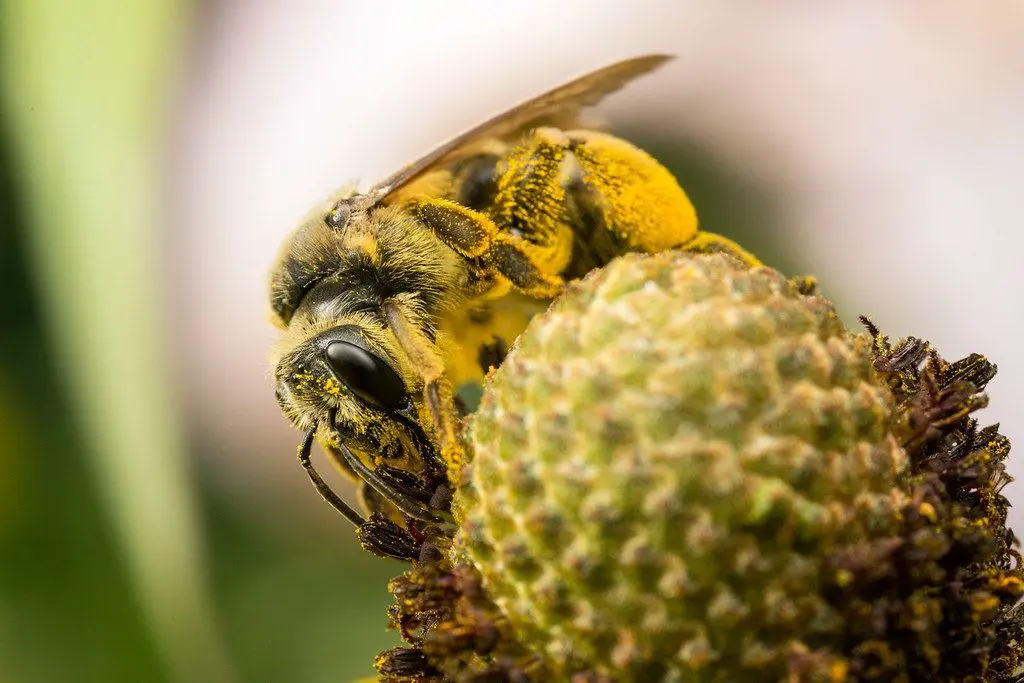
Spend a few minutes watching a flower bed on a warm morning. That fuzzy giant on the tomato blossom, the tiny metallic green insect on the aster, and the small dark bee that keeps vanishing into a stem are all likely natives, and none of them lives in a hive.
The United States has about 3,600 bee species, according to Utah State University Extension, and the honey bee isn’t one of the natives. It was brought here, and it’s the only one that makes honey in large amounts. Most of the others live quiet lives that are easy to miss until you know what to look for.
Bumble Bees: The Big Fuzzy Ones
Bumble bees are the easiest natives to recognize. They’re also unusual among native bees because they live in small colonies. A queen starts a nest alone in spring, often in an old rodent burrow or another sheltered spot, and raises workers who take over the foraging. In fall, new queens mate and find a place to spend the winter. The old queen, workers, and males die, and each surviving young queen starts over the next spring.
They have a talent that honey bees lack, too. Bumble bees use buzz pollination, shaking pollen loose by vibrating the flower. Utah State University Extension notes that this works especially well on tomatoes, eggplants, potatoes, and blueberries.
Sweat Bees: Small and Often Metallic
If you’ve ever spotted a tiny bee shining green or blue, it was probably a sweat bee. Bees come in more colors than the black-and-yellow stripes we all learned as kids, and Utah State University Extension notes that sweat bees can be metallic green or blue.
Mason Bees: Tiny Builders
Mason bees get their name from the way they work. A female finds a hollow stem or an old beetle tunnel about the width of a pencil, packs in a loaf of pollen and nectar, lays one egg on top, and seals it off with mud. She repeats this cell by cell until the tunnel is full. WSU Master Gardeners say she lays just 10 to 40 eggs in her life and dies after about four to six weeks. The young stay sealed inside until the following spring.
Squash Bees: Early Risers in the Vegetable Patch
If you grow squash, pumpkins, or gourds, look inside the flowers early in the day. Squash bees are specially adapted to these plants and will even sleep inside the blossoms at night.
Where Native Bees Live
Most native bees in the U.S. nest in soil, not in hives. Others, including mason, leafcutter, and carpenter bees, use twigs or wood. Ground-nesting bees usually prefer spots with morning sun, well-drained soil, and bare ground or sparse plants.
Seeing a lot of small holes and low-flying bees in your lawn can look alarming, but it usually isn’t a swarm. Each female has her own burrow, and many of them simply happen to share a good patch. University of Georgia specialists explain that these bees generally don’t defend their nests aggressively, unlike yellow jackets and honey bees.
Are They Likely to Sting?
Bees don’t go looking for trouble. Stings generally happen when a bee is threatened or harmed. Male bees can’t sting at all, since the stinger developed from the female’s egg-laying structure. Anyone with a bee allergy should still take care around nests, and wasps are a separate matter. Yellow jackets are often mistaken for bees, but they’re slimmer, less fuzzy, and more likely to be defensive.
Simple Ways to Help Them
A bee-friendly yard doesn’t need to be a big project. Try a few of these:
- Grow native flowers: choose plants suited to your region. The National Wildlife Federation’s Native Plant Finder lists options by zip code.
- Leave some bare ground: a sunny patch with no mulch gives ground nesters a place to dig.
- Save old stems: WSU Master Gardeners suggest leaving hollow stems standing over winter, then cutting them to about 8 to 24 inches at the end of winter. Bee balm, raspberries, and coneflowers are good choices.
- Skip the insecticides: WSU Master Gardeners warn that systemic products can linger in the soil.
- Keep a muddy spot: mason bees need moist soil for building.
If you put up a bee hotel, plan to maintain it. Parasites and disease can build up if nesting material isn’t replaced regularly, so an unattended hotel may do more harm than good.
You can read more about the insects visiting your yard in our butterflies and pollinators section. Next time you pass your flower bed, slow down for a minute. There’s a good chance you’ll spot a bee you’ve never noticed before.
Sources: Utah State University Extension; University of Georgia CAES; WSU Chelan-Douglas Master Gardeners; myMotherLode.com.